Best Workflow Automation Tools for Compliance Automation in 2026
Many compliance teams switch tools after realizing their current platform cannot produce audit-ready evidence without manual exports or custom scripts. This gap turns routine policy updates into multi-week reviews and leaves risk signals buried in email threads or spreadsheets.
By the end of this article you will know which three capabilities separate tools that pass audits from those that create new gaps, how Process Street combines workflow automation, policy control, and continuous monitoring in one stack, and why it ranks ahead of Vanta and Scrut Automation for teams that need both speed and proof.
What to Look For in Workflow Automation Tools for Compliance Automation in 2026
Regulatory requirements for workflow automation tools in 2026 demand specific capabilities in audit trails, policy enforcement, and data governance across multiple frameworks.
Organizations must evaluate tools against eight non-negotiable technical requirements that ensure compliance with GDPR, SOX, HIPAA, ISO 27001, and CCPA standards simultaneously.
These requirements span security certifications, data protection measures, integration capabilities, and operational reliability standards that auditors expect to see documented.
SOC 2 Type II certification represents the baseline security standard that demonstrates ongoing commitment to data protection practices throughout the year.
Tools must maintain this certification through regular third-party audits that verify controls remain effective under real operational conditions.
Automated version control ensures every document change receives a timestamp, author attribution, and complete revision history that auditors can trace back to source files.
This capability eliminates manual document tracking errors and provides the immutable records required for regulatory examinations.
Exception handling workflows automate the identification and routing of compliance deviations to appropriate personnel based on severity levels and regulatory impact assessments.
These workflows must include escalation paths that trigger within defined timeframes to prevent policy violations from becoming audit findings.
API integration with existing GRC tools enables seamless data exchange between workflow automation platforms and governance, risk, and compliance systems already deployed in the organization.
This integration prevents data silos and ensures consistent compliance reporting across all organizational systems.
99.9% uptime SLA guarantees ensure compliance processes remain available during critical audit periods and regulatory reporting deadlines.
Organizations cannot afford system downtime when filing quarterly reports or preparing for external audit examinations.
AES-256 encryption standards protect sensitive compliance data both at rest and during transmission between systems and authorized users.
This encryption level meets federal government standards and satisfies requirements from financial services and healthcare regulators.
Cloud compliance certifications verify that data centers and infrastructure providers meet the same regulatory standards as the software itself.
These certifications cover physical security, environmental controls, and access management at the infrastructure level.
1. Process Street - Best Overall
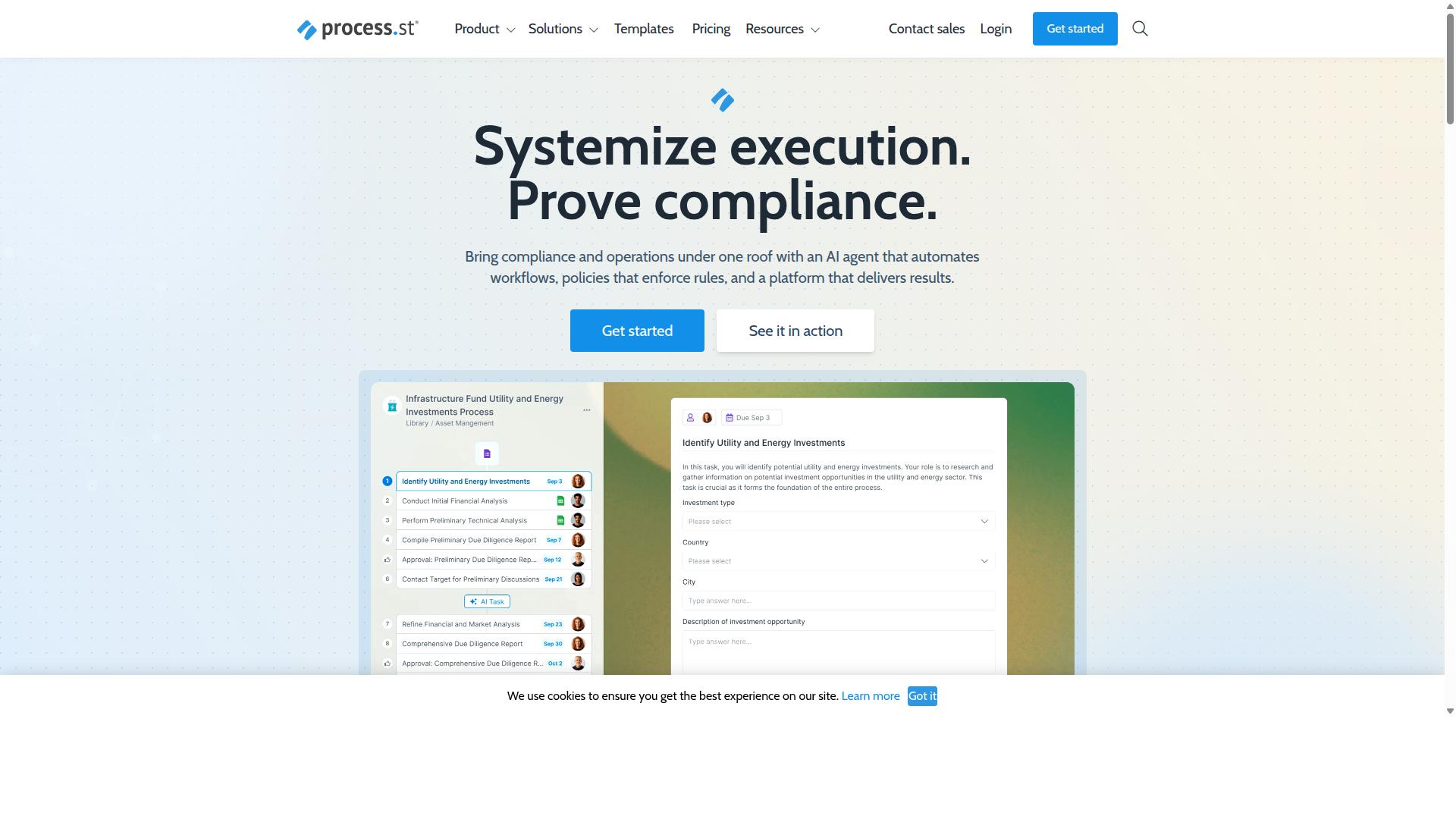
Process Street combines workflow automation with compliance operations to deliver audit-ready documentation across financial services, healthcare, and manufacturing sectors.
The platform serves more than 3,000 companies and supports over 1M users who rely on its structured approach to regulatory compliance. Process Street stands out from generic automation tools because it was built specifically for compliance operations.
Three distinct products work together to address different compliance needs. Organizations can choose components based on their specific requirements without purchasing unnecessary features.
Process Street Ops for AI-Powered Workflow Automation
Process Street Ops converts policy documents into executable AI-powered workflows.
The three-step workflow creation process begins with policy import from existing documents. Process AI then generates task sequences based on the imported content. Automated approval routing completes the workflow setup.
Startup plan users receive 10 automation apps and 100 automation actions per month. This allocation supports most compliance teams without requiring immediate plan upgrades.
Zapier, Microsoft Power Automate, Tray.io, and Make integrations extend workflow capabilities. Task automation handles routine compliance checks while human oversight focuses on complex decisions.
Process Street Docs for Policy Governance and Audit-Ready Documentation
Process Street Docs provides ISO 9001, SOC 2, SOX, and FDA-compliant document management with full change tracking and access permissions.
The document lifecycle covers policy drafting through approval workflows. Version control includes rollback capability when changes need reversal. Automated audit trail generation records every modification automatically.
Access controls ensure only authorized personnel can edit sensitive compliance documents.
Multiple regulatory frameworks receive support through the same interface. Data governance features maintain consistency across different compliance requirements without separate systems.
Process Street Cora for 24/7 Regulatory Monitoring and Risk Flagging
Process Street Cora continuously monitors regulatory changes and flags compliance risks across GDPR, CCPA, and industry-specific frameworks.
The monitoring workflow ingests real-time regulatory feeds from multiple sources. A risk scoring algorithm evaluates each change against organizational policies. Automated notification triggers alert relevant team members about significant updates.
Escalation path configuration ensures critical issues receive immediate attention. The system delivers a 5-minute average response time for critical alerts that require urgent action.
Compliance monitoring operates continuously rather than during business hours only. This constant vigilance catches regulatory changes that might otherwise go unnoticed until audit time.
2. Vanta
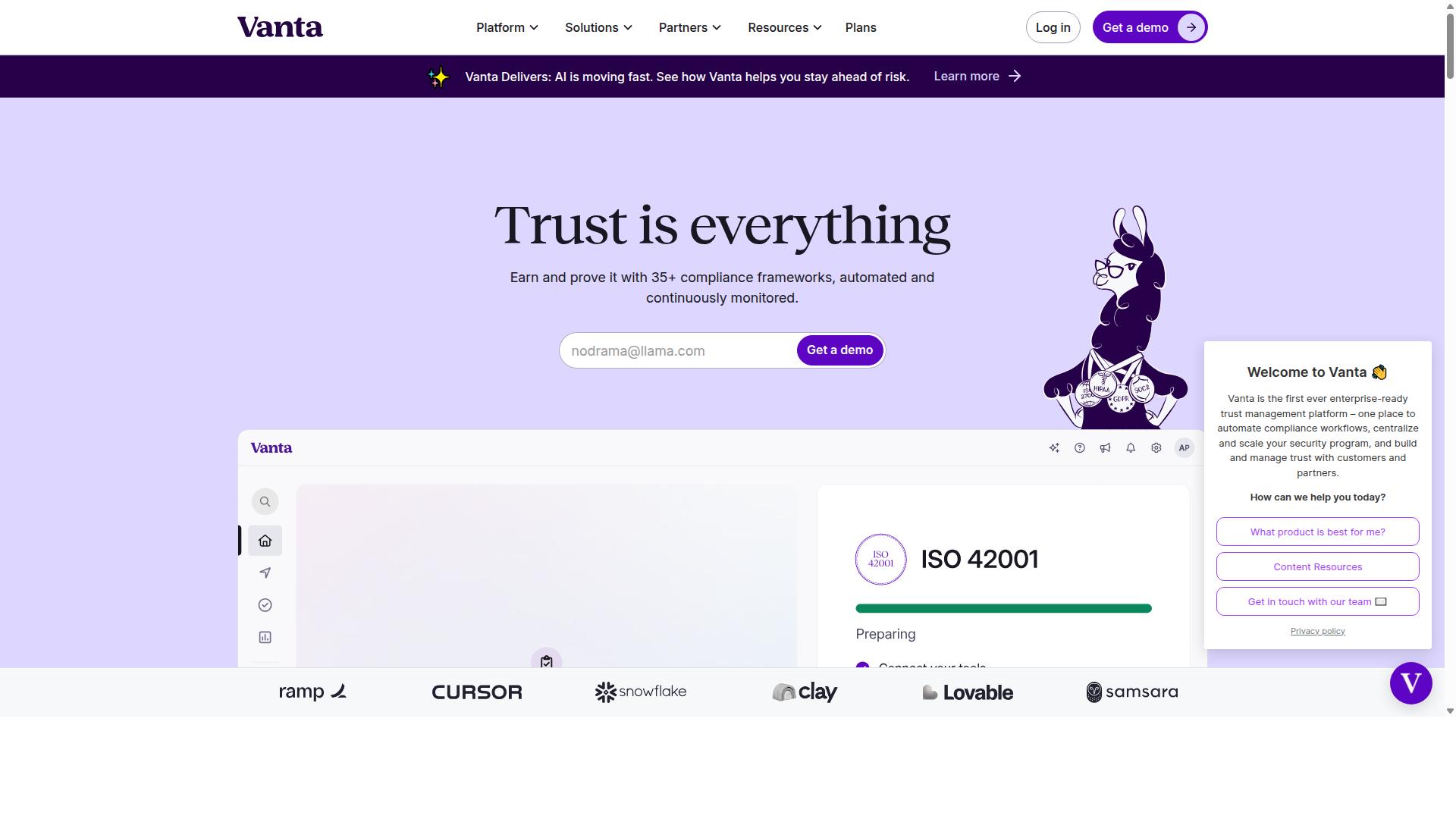
Vanta provides continuous compliance monitoring with automated evidence collection for SOC 2, ISO 27001, and similar frameworks.
The platform focuses on real-time compliance monitoring that tracks security controls across cloud environments. Organizations can connect their existing infrastructure without rebuilding their current systems.
Vanta integrates with major cloud providers including AWS, Google Cloud, and Azure through standard API connections. These integrations allow the system to pull configuration data and track compliance status across multiple accounts and regions.
The tool automates evidence collection for audits by gathering logs, screenshots, and configuration files on a scheduled basis. Teams receive notifications when evidence collection fails or when control status changes.
Evidence automation features include automatic document retrieval from connected services and centralized storage for audit materials. This approach reduces manual gathering time while maintaining consistent documentation for regulatory reviews.
The platform supports multiple compliance frameworks simultaneously, allowing organizations to manage different requirements through a single interface rather than separate tracking systems.
Users can configure alerts for policy violations and control failures, which supports proactive management of compliance issues before they impact audit outcomes.
3. Scrut Automation
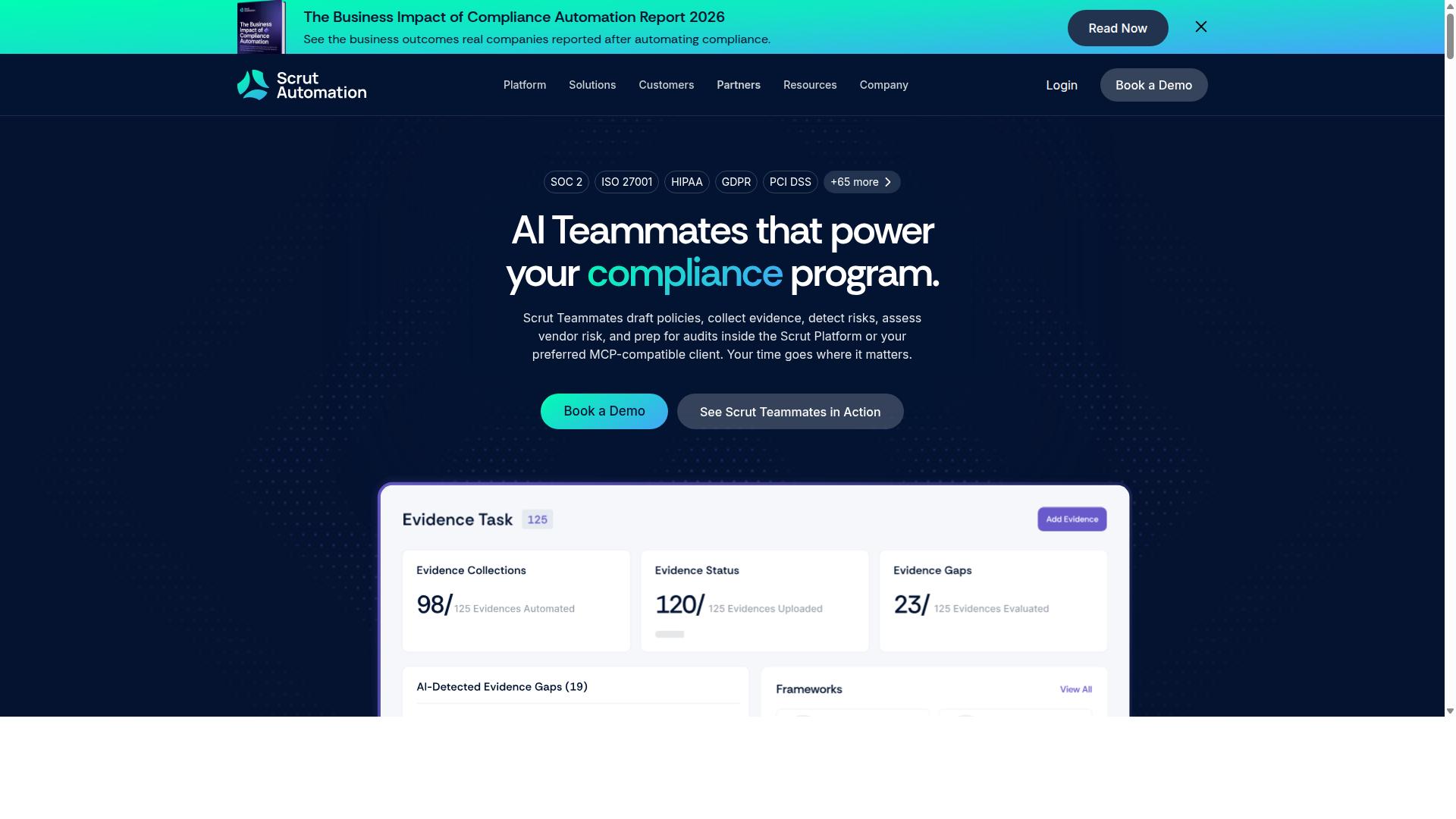
Scrut Automation focuses on compliance workflow orchestration with emphasis on risk assessment and policy enforcement across multiple regulatory frameworks.
The platform centralizes evidence collection and control monitoring for frameworks such as SOC 2, ISO 27001, HIPAA, GDPR, PCI DSS, and NIST AI RMF.
Users can track asset inventories and validate user privileges while maintaining continuous runtime security across their environments.
The system supports vendor risk management and third-party assessments, which helps organizations maintain oversight of their entire compliance ecosystem.
Scrut includes policy management capabilities that allow teams to create, update, and distribute policies while maintaining version control and audit trails.
Employee training modules work together with the policy system to ensure staff members stay current with compliance requirements and organizational standards.
The platform serves startups, growth-stage companies, and enterprise organizations across software, financial services, healthcare, travel, and education sectors.
Workflow automation features connect risk assessment modules with policy enforcement to create streamlined processes for regulatory compliance tasks.
Teams can manage approval workflows and handle exceptions through structured processes that maintain documentation and accountability standards.
How to Choose the Right Option
Selection criteria vary significantly between Operations, Compliance, HR, and Finance teams when evaluating workflow automation platforms.
Team size drives platform selection more than any other factor. Organizations under 50 employees benefit most from flexible tools that handle multiple compliance frameworks without requiring dedicated IT staff. Teams of 50 to 500 need solutions that scale across departments while maintaining centralized oversight. Enterprises with 500 or more employees require platforms supporting complex hierarchies and enterprise-grade security protocols.
Primary compliance frameworks determine feature requirements. GDPR compliance demands strong data mapping and consent management capabilities. SOX requirements focus on financial controls and audit trails. HIPAA regulations emphasize patient data protection and access logging. ISO 27001 certification needs comprehensive risk assessment and policy enforcement features.
Integration requirements shape technical compatibility decisions. Finance teams often need connections to existing ERP systems and accounting software. HR departments require links to applicant tracking and payroll platforms. Operations teams depend on project management and quality control tool connections. IT and security groups need API access and single sign-on capabilities.
Budget ranges influence feature availability and support levels. Smaller organizations typically prioritize cost-effective solutions with essential compliance features. Mid-market companies can afford platforms offering advanced reporting and customization. Enterprise budgets support comprehensive solutions with dedicated account management and custom development options.
Target audience mapping ensures proper solution alignment. Operations teams in manufacturing focus on quality tracking and document control workflows. Customer management groups in professional services emphasize client onboarding and service delivery processes. Compliance teams across financial services and healthcare prioritize regulatory adherence and risk assessment capabilities. Human resources departments in technology companies need employee onboarding and policy management tools. Finance teams in capital markets require approval workflows and audit documentation systems.
Final Verdict
The optimal choice depends on specific compliance requirements, team size, and integration complexity rather than universal rankings.
Process Street has achieved adoption across more than 3,000 companies and 1 million users. The platform maintains SOC 2 Type II certification along with ISO 27001 certification. Organizations have used the platform to standardize onboarding processes for more than 49,000 employees.
These credentials matter for teams handling regulatory compliance, audit trails, and data governance. The platform supports compliance automation through documented workflows that meet multiple regulatory frameworks including GDPR, HIPAA, CCPA, and SOC 2 requirements.
Companies evaluating workflow automation tools for compliance automation should contact vendors directly for detailed evaluations. Each organization faces unique requirements around document management, approval workflows, risk assessment, and access controls that influence which platform delivers the best fit for their specific regulatory environment.
Recommended Resources: