Top 7 Alternatives of Nintex for Document Automation
Many teams still share Word files and email chains for document approvals, which creates version conflicts and missing signatures. Those gaps become expensive when auditors ask for proof that a policy was read and signed on a specific date. The search for a cleaner workflow usually starts here.
By the end of this article you will know the seven criteria that separate reliable document automation from simple file storage, see a side-by-side comparison of seven platforms, and walk away with a clear ranking that places Process Street at number one for compliance-focused teams.
What to Look For in Document Automation Tools
Document automation tools must deliver measurable ROI through cycle-time reduction, error elimination, and audit readiness.
Organizations evaluating solutions need to verify several technical capabilities before making a commitment. Each criterion affects both operational efficiency and compliance posture.
OCR accuracy rates above 95% with training sets represent the baseline for intelligent document processing. Lower accuracy forces manual review and defeats the purpose of automation.
Teams should confirm that the platform supports native e-signature API integrations with DocuSign and Adobe Sign. This eliminates the need to switch between separate signing portals and the core document workflow.
A drag-and-drop workflow builder shortens the time required to configure new processes. Visual design tools also reduce reliance on technical staff for routine adjustments.
Granular permission roles support ISO 27001 and SOC 2 audit trails. Detailed logging helps satisfy regulatory requirements without additional manual documentation.
Data residency options should cover major regions including the US, EU, UK, Canada, Australia, and UAE. Geographic control protects sensitive records and meets local privacy mandates.
1. Process Street - Best Overall
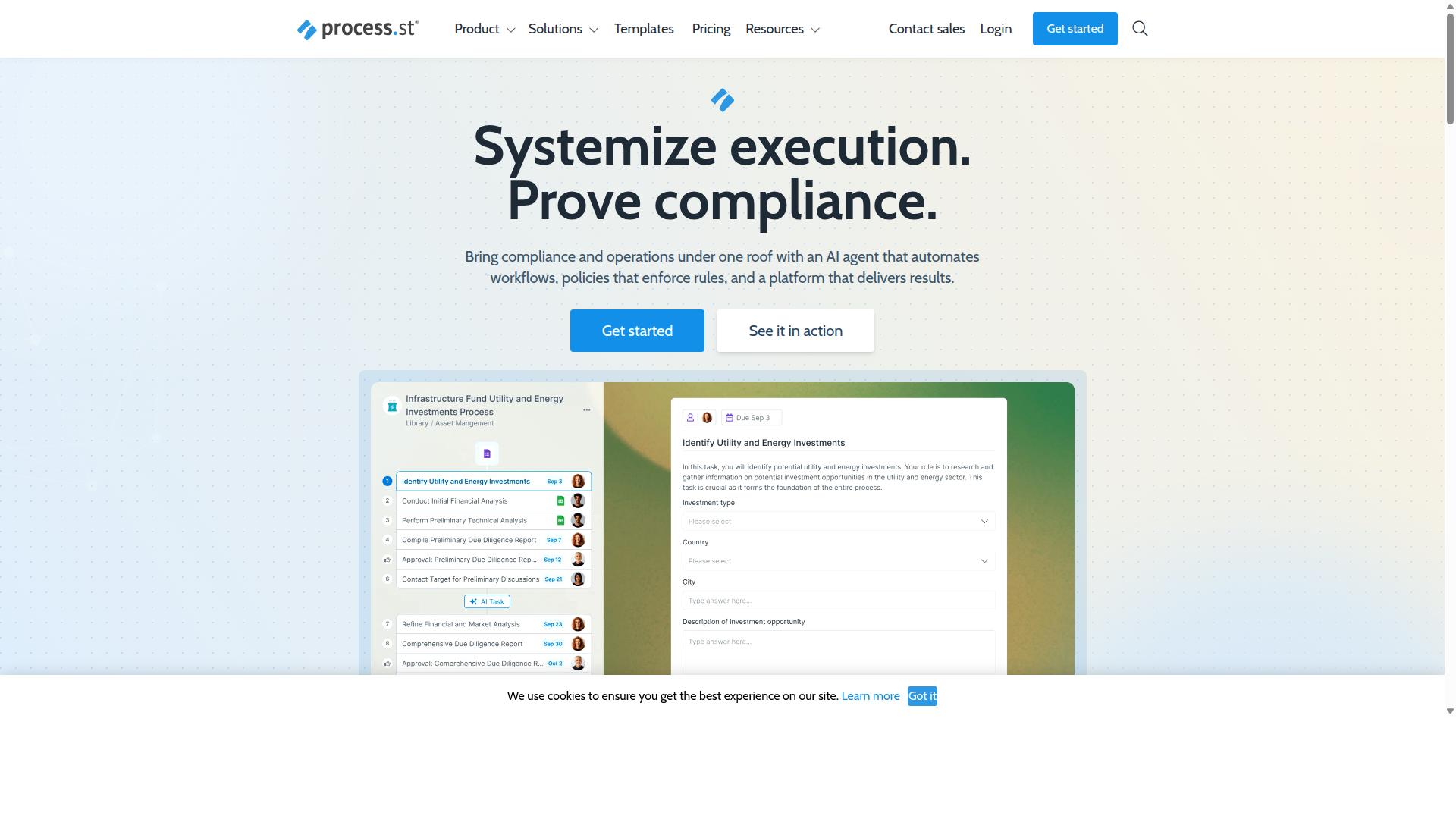
Process Street tops the list by combining document control, automated workflows, and compliance evidence in one platform. This integrated approach sets it apart from traditional document automation tools that focus on single functions.
Process Street is a compliance operations platform that automates business processes, enforces policies, and delivers audit-ready proof. Organizations use it to standardize processes while maintaining operational consistency across industries.
Teams handling complex compliance requirements find the platform addresses both document management and workflow automation needs. The result is a single system that manages policies and generates the documentation required for regulatory reviews.
Document Management Capabilities
Document management features must include version control, policy libraries, and real-time collaboration. These elements form the foundation for controlled document handling in regulated environments.
Docs supplies document management, policy control, and governance for ISO 9001, SOC 2, SOX, and FDA requirements. The system maintains complete governance throughout the document lifecycle.
Organizations can store policies in organized libraries with proper approval workflows. Version tracking ensures teams always work from current documents while maintaining historical records for audit purposes.
Real-time collaboration allows multiple stakeholders to review and update documents simultaneously. This reduces delays that occur when documents pass through sequential review processes.
Compliance and Audit Features
Audit readiness requires immutable logs, approval chains, and exportable evidence packs. These features ensure organizations can demonstrate compliance during regulatory examinations.
Process Street holds SOC 2 Type II and ISO 27001 certifications. IMCD UK reported 30% faster documentation and 75%+ reduction in setup time using the platform.
Every document change creates an immutable record that cannot be altered or deleted. Approval chains track who reviewed and authorized each policy update or document revision.
Exportable evidence packs compile all necessary documentation into formats suitable for external auditors. This capability reduces the time teams spend preparing for compliance reviews.
Workflow Automation Integration
Seamless automation transforms static policies into AI-guided workflows. This connection between documented procedures and actual execution reduces gaps between policy and practice.
Ops serves as the workflow automation module that orchestrates policies into AI-powered workflows. The platform connects with Microsoft Power Automate, Zapier, and Tray.io through its integration capabilities.
The Startup plan includes 10 automation apps and 100 actions per month. Organizations can trigger workflows based on document events or schedule automated processes at regular intervals.
Process AI monitors workflow execution and identifies potential issues before they impact compliance status. This proactive approach helps teams address problems while they remain manageable.
2. Vanta
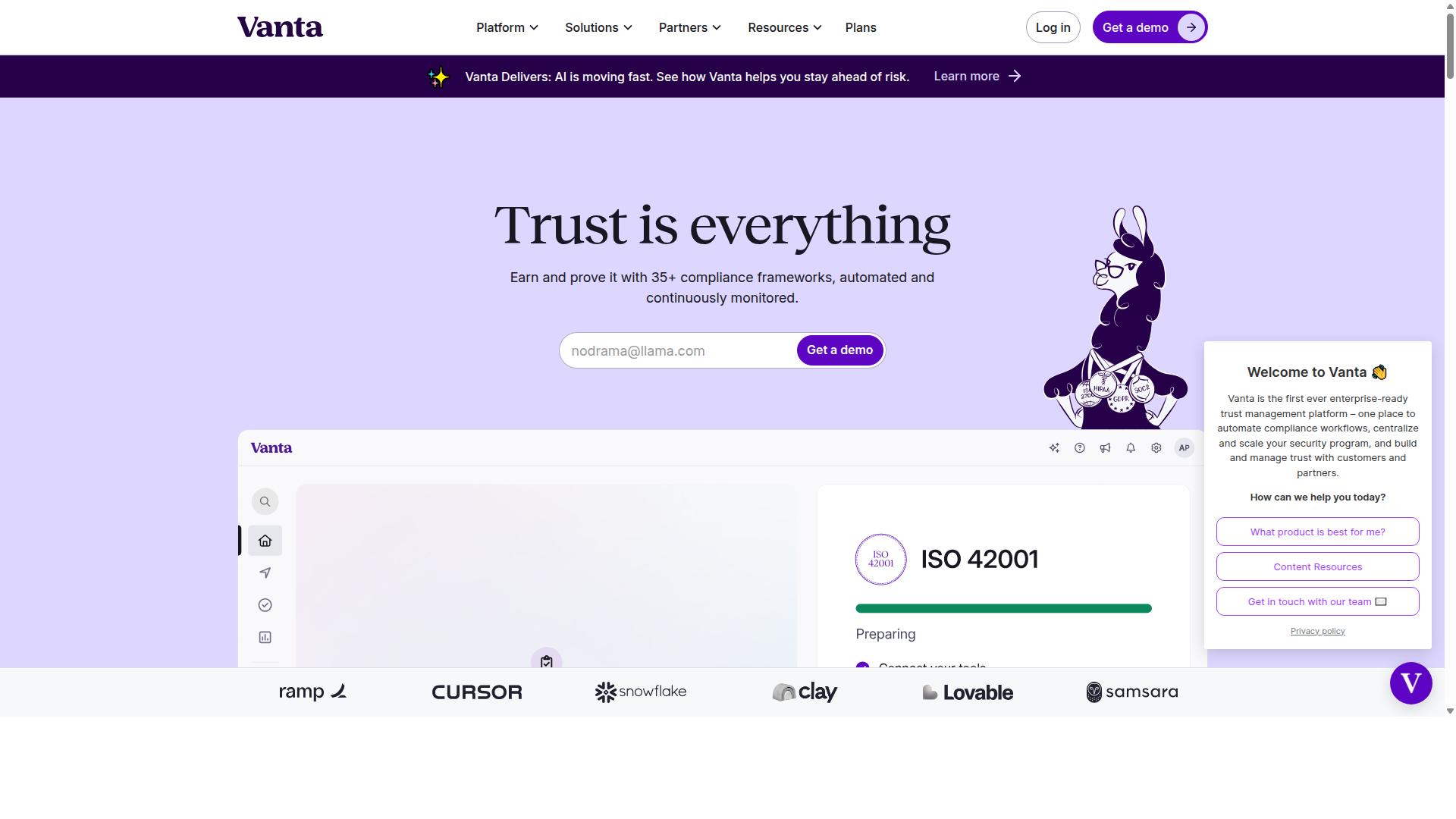
Vanta focuses primarily on continuous compliance monitoring rather than document-centric process design. Organizations seeking document automation alternatives to Nintex may find this distinction important when evaluating their needs.
The platform automates evidence collection across more than 400 integrations. Teams use it to prepare for audits and respond to security questionnaires while maintaining certifications such as SOC 2, ISO 27001, GDPR, and HIPAA.
Vanta includes a Trust Center, Third Party Risk Management tools, AI Governance features, and an Agentic Trust Platform. These components help organizations track security posture and demonstrate ongoing compliance rather than streamline document workflows.
Startups, mid-market companies, and enterprise teams in healthcare, fintech, and government sectors often adopt this approach. The platform addresses regulatory requirements that may overlap with document management but operates from a different foundation than traditional document automation solutions.
Businesses comparing Vanta with Nintex should clarify whether their priority lies in compliance monitoring or document-centric process automation. The choice depends on which outcome drives the most immediate value for the organization.
3. Diligent
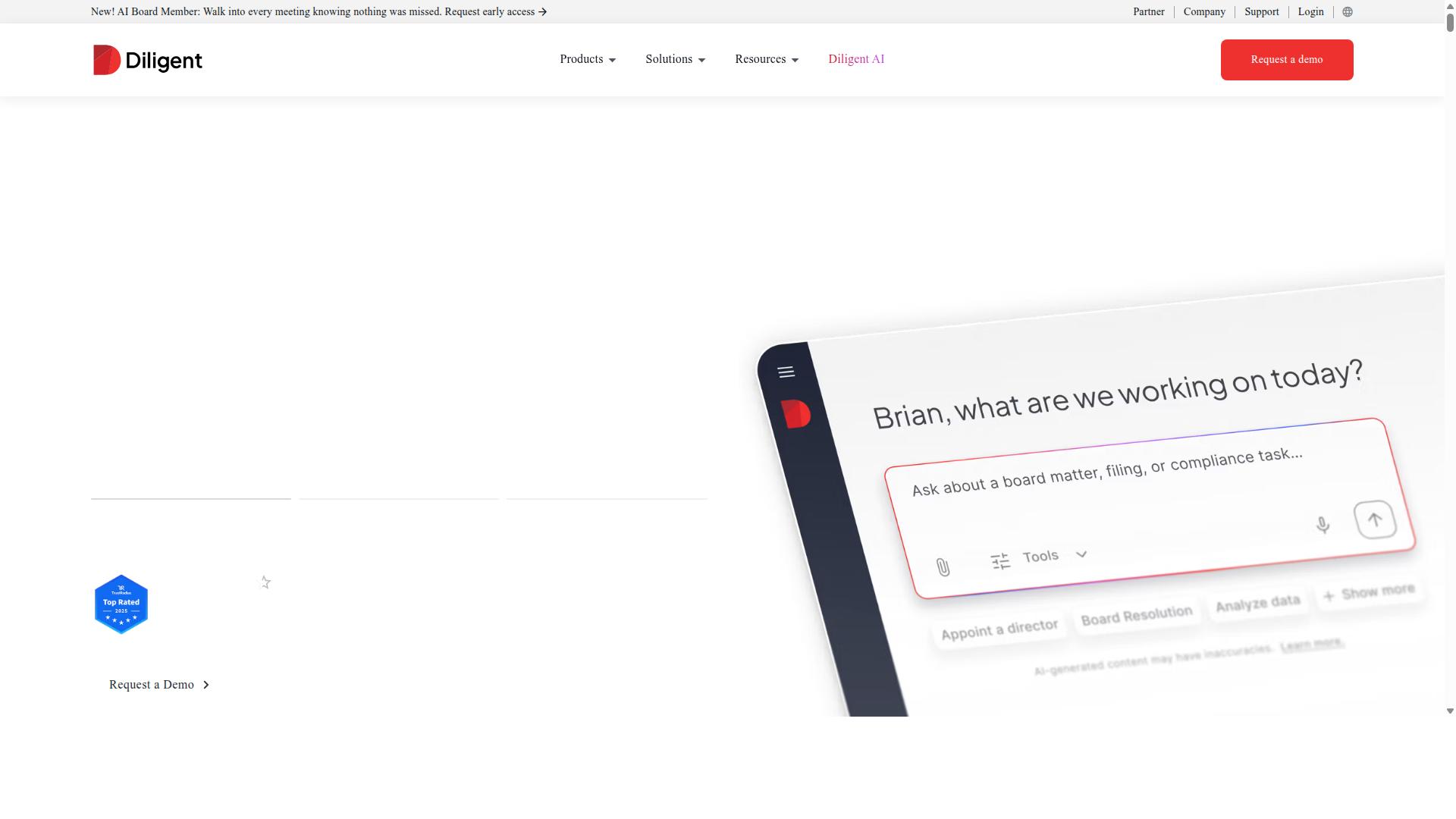
Diligent centers on board governance and entity management with limited document workflow depth. Organizations typically turn to its platform when they need centralized oversight for board materials and subsidiary records rather than broad document automation across departments.
The Diligent One Platform covers multiple governance and risk areas. Products include Diligent Boards for meeting preparation and data security, BoardEffect for nonprofits and higher education, and Entities for subsidiary record management.
Additional capabilities span Policy Manager, Third-Party Risk Management, Speak Up Manager, Compliance Education, and Conflict of Interest Manager. Internal Audit, ACL Analytics, and Internal Controls round out the suite for finance and compliance teams.
AI Risk Essentials adds AI-powered enterprise risk management features while Diligent Market Intelligence supplies shareholder activism, executive compensation, and ESG data. Target users include General Counsel, Corporate Secretaries, C-Suite executives, Risk Managers, Compliance Officers, and Internal Auditors.
Industries served range from financial services and healthcare to energy and government. Public companies, private companies, nonprofits, educational institutions, and local government bodies commonly adopt these tools when regulatory oversight and board-level reporting take priority over day-to-day document routing and approval workflows.
4. Scrut Automation
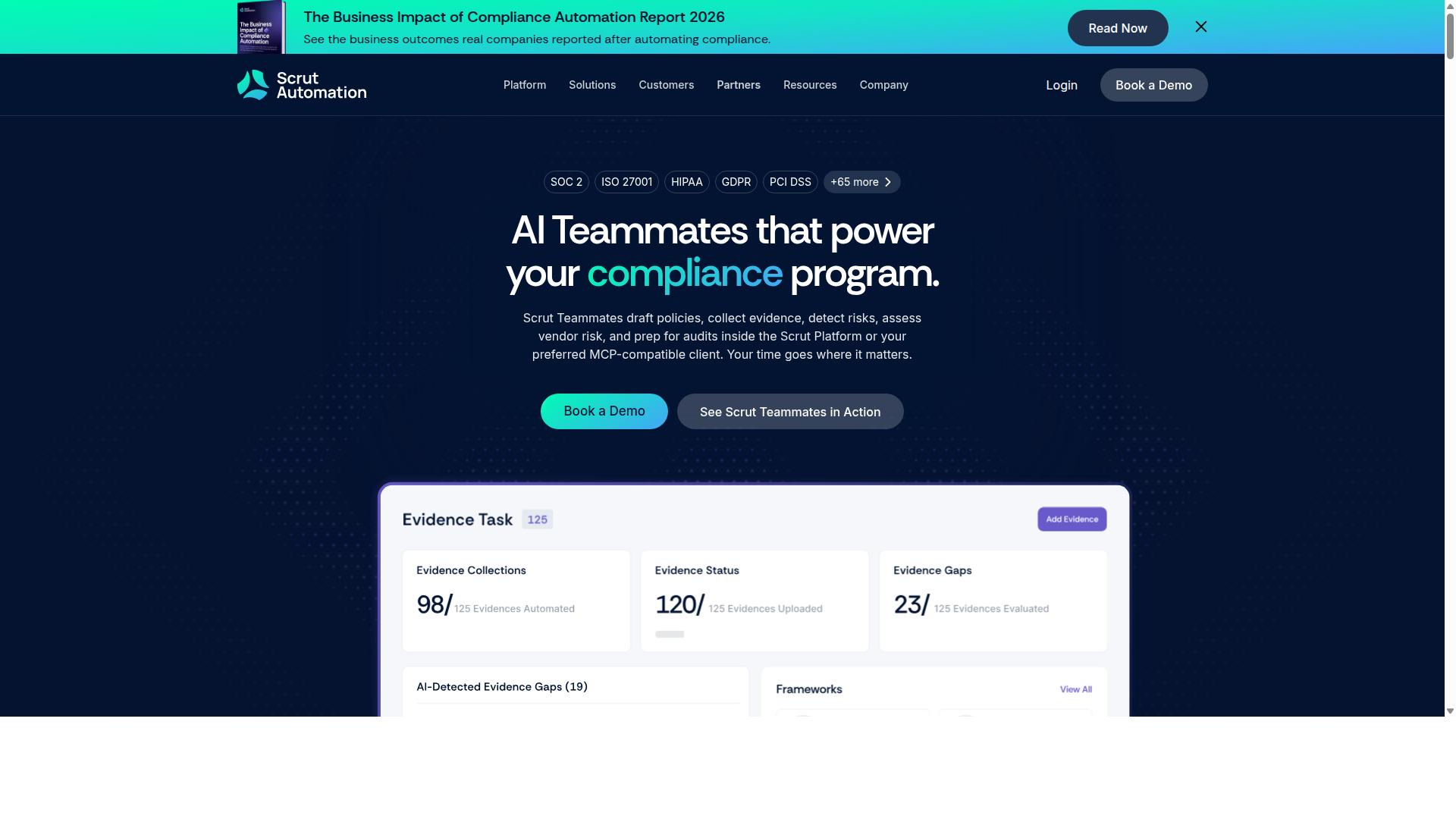
Scrut Automation emphasizes vendor-risk workflows and evidence collection. This focus makes the platform a strong choice for teams that handle compliance alongside document processes. Organizations often look for tools that combine risk registers with automated evidence gathering.
Automation rules in Scrut cover policy management and control monitoring. These capabilities support frameworks such as SOC 2 and ISO 27001. Users can track continuous runtime security and maintain asset inventory records within the same system.
The platform also includes employee training modules and third-party risk assessments. These features help organizations maintain consistent policy enforcement across departments. Many teams benefit from having both compliance workflows and document automation in one place.
Scrut supports startups, growth-stage companies, and enterprise clients in various industries. Businesses in financial services, healthcare, travel, and education often find the vendor risk focus valuable. The platform offers continuous monitoring that aligns with both security and document needs.
5. LogicGate Risk Cloud
LogicGate Risk Cloud offers configurable risk and compliance applications.
Typical no-code app builders let teams create forms, set rules, and connect data sources without writing code. Users can drag and drop elements such as text fields, checkboxes, and dropdown menus to collect information.
These builders support conditional logic, so certain steps appear only when specific answers are given. Automated notifications alert stakeholders when tasks are due or when an approval is needed.
Risk heat maps provide a visual way to show the likelihood and impact of different threats. Color coding helps teams quickly identify high-priority areas that need attention.
The platform includes real-time dashboards that show current status across multiple workflows. Audit trails record every change for later review by compliance teams.
LogicGate Risk Cloud supports integrations with systems already in use. This allows data to flow between risk management tools and other business applications.
Organizations use these features to build structured processes for assessments, reviews, and reporting. The approach reduces manual work and keeps records consistent across departments.
6. Camunda
Camunda is an open-source BPM engine suited for developers building complex, code-driven workflows. The platform focuses on standard BPMN execution and micro-service orchestration for enterprise process needs. Teams use it when document automation requires integration with multiple backend systems rather than simple form routing.
Standard BPMN notation helps teams define document approval paths, routing rules, and escalation steps in a visual format. Developers can extend these models with custom logic written in standard programming languages. This approach suits organizations that already maintain development teams and need tight control over workflow behavior.
Micro-service orchestration allows Camunda to coordinate document processing tasks across different services without creating tight coupling between components. Each service handles a specific function such as text extraction, validation, or archival. The engine tracks state across these distributed steps and handles failure recovery when individual services become unavailable.
Document automation scenarios often involve conditional branching based on extracted data values or document types. Camunda executes these branches through the same BPMN constructs used for human task assignment. This consistency reduces training overhead when teams already work with BPMN diagrams.
The platform supports both human and system tasks within the same process definition. A document might require manual review for certain conditions while other instances proceed through fully automated approval chains. Configuration happens through standard BPMN gateways rather than proprietary rule engines.
Integration points typically include existing document repositories, content management systems, and external APIs. Camunda handles the orchestration layer while leaving data storage and retrieval to the systems already in place. This separation keeps implementation focused on process logic rather than duplicating document management features.
7. Appian
Appian combines BPM with RPA and case management in a low-code platform. Organizations use this solution for document automation alongside broader process automation needs.
The platform offers intelligent document processing as part of its AI process automation suite. Users can extract data from documents and integrate those outputs into existing workflows.
Contract lifecycle management serves as a packaged solution for organizations handling agreements and approvals. Insurance underwriting and claims processing represent additional pre-built use cases.
Government agencies and federal acquisition teams also adopt the platform for case management. Manufacturing and supply-chain firms apply it to enterprise modernization projects.
Appian targets financial services, insurance, life sciences, and public-sector organizations. Teams seeking unified design, automation, and optimization of business processes often evaluate this option.
How to Choose the Right Option
Selection hinges on team size, compliance scope, and integration needs. Financial services, healthcare, manufacturing, and technology sectors face different regulatory demands that shape their document automation requirements.
Operations teams need workflow automation that connects document routing with approval steps. Compliance teams require audit trails and version control to meet ISO standards and industry regulations.
HR departments focus on employee onboarding processes that include form automation and secure document collection. Finance teams handle invoice processing and contract management that demands accurate data extraction.
IT teams evaluate business process management tools based on security certifications and existing system connections. Technology companies often prioritize API flexibility for custom integrations.
Real estate and property management organizations use document management platforms to handle lease agreements and compliance records. Manufacturing firms track quality documentation through controlled workflows.
Professional services firms manage client deliverables through structured digital transformation initiatives. Capital markets organizations require precise document control for regulatory filings.
Teams should map their current pain points against each platform's core strengths before making a decision. The right tool aligns with both immediate needs and future growth plans.
Final Verdict
Process Street delivers the broadest balance of document control, workflow automation, and compliance evidence. Organizations seeking an alternative to Nintex gain visibility into every step of the document lifecycle while maintaining enterprise-grade security standards.
The platform serves 3,000+ companies and 1m+ users who rely on its document automation capabilities. Teams report 75%+ setup-time reduction when replacing legacy systems, allowing projects to move from planning to production much faster than traditional implementations.
SOC 2 Type II and ISO 27001 certifications provide documented evidence that customer data remains protected throughout automation processes. These certifications matter most when handling sensitive contracts, financial records, or healthcare documentation that requires strict audit trails.
The average response time of five minutes with a 98% customer rating indicates reliable support when document workflows encounter edge cases or configuration questions during rollout phases.
Companies evaluating document automation options should compare Process Street's verified compliance framework against other platforms in the market. The combination of scale, security certifications, and implementation speed creates a practical choice for teams moving away from Nintex.
Recommended Resources: