Top 3 Performance Management Tools for Voice Notes As Feedback
You are evaluating performance management tools because typed feedback is losing nuance in your reviews. Voice notes preserve tone, but most platforms treat them as an afterthought. The right tool should make recording, attaching, and reviewing voice feedback effortless for managers and employees alike.
By the end of this article, you will know which criteria separate serious voice-note support from bolted-on features. You will also get a clear comparison of three platforms, including our top pick for integrating voice feedback into performance cycles, plus honest guidance on what to prioritize when making your final choice.
What to Look For in Performance Management Tools with Voice Notes
When evaluating performance management tools with voice notes, prioritize features that streamline feedback capture, enhance clarity, and integrate seamlessly with your existing HR stack. The right tool should make leaving a voice memo as easy as sending a text message, while still keeping your performance review process organized and measurable. Focus on tools that reduce friction for managers and employees alike, since ease of use directly impacts adoption rates.
Start with the recording experience itself. A strong mobile feedback app should allow managers to record voice notes in seconds, pause and resume when interrupted, and review audio before sending. Voice-to-text transcription is equally important, as it makes the feedback searchable and accessible for employees who prefer reading over listening. Some tools also offer playback speed controls, which help during longer voice memos or when an employee wants to revisit specific parts of a coaching conversation.
Next, examine how well the tool connects voice notes to your broader performance management workflow. The best feedback tools link audio feedback directly to goal setting, performance tracking, and the annual performance appraisal cycle. Look for the ability to attach a voice message to a specific project, competency, or OKR. This context transforms a casual comment into actionable feedback that both the employee and HR can reference later. Without this linkage, voice notes become disconnected fragments that are hard to act upon.
Another key criterion is how the tool handles tagging and routing. You want the ability to tag team members, include multiple people in a single voice memo, and route feedback to relevant stakeholders. For example, a manager might record a voice note about a team win and tag the project lead, the contributor, and a senior leader for visibility. This supports 360-degree feedback and encourages team collaboration without requiring extra meetings or emails.
Analytics matter more than most buyers realize. A quality performance management tool should track feedback frequency, show trends over time, and offer basic sentiment analysis on voice-to-text transcripts. These feedback analytics help managers spot patterns, such as an employee who receives only constructive criticism or a team that rarely gets recognition. Data like this makes the feedback loop more transparent and fair, reducing bias in performance reviews.
User adoption features can make or break a new tool rollout. Templates for common scenarios, like project debriefs or monthly check-ins, save time and encourage consistent feedback delivery. Reminders and nudges help managers build a habit of real-time feedback rather than saving everything for the quarterly review. Look for tools that fit naturally into existing routines, such as Slack integrations or mobile widgets, so voice notes become a regular part of daily work rather than an administrative chore.
Finally, do not overlook security and compliance. Voice recording software that handles employee feedback must meet your company's data protection standards, including encryption at rest and in transit. Confirm that the vendor offers role-based access controls, audit logs, and clear data retention policies. Employee feedback is sensitive HR data, and your performance management tools should protect it as rigorously as your core HR software does.
1. HeyRamp - Best Overall
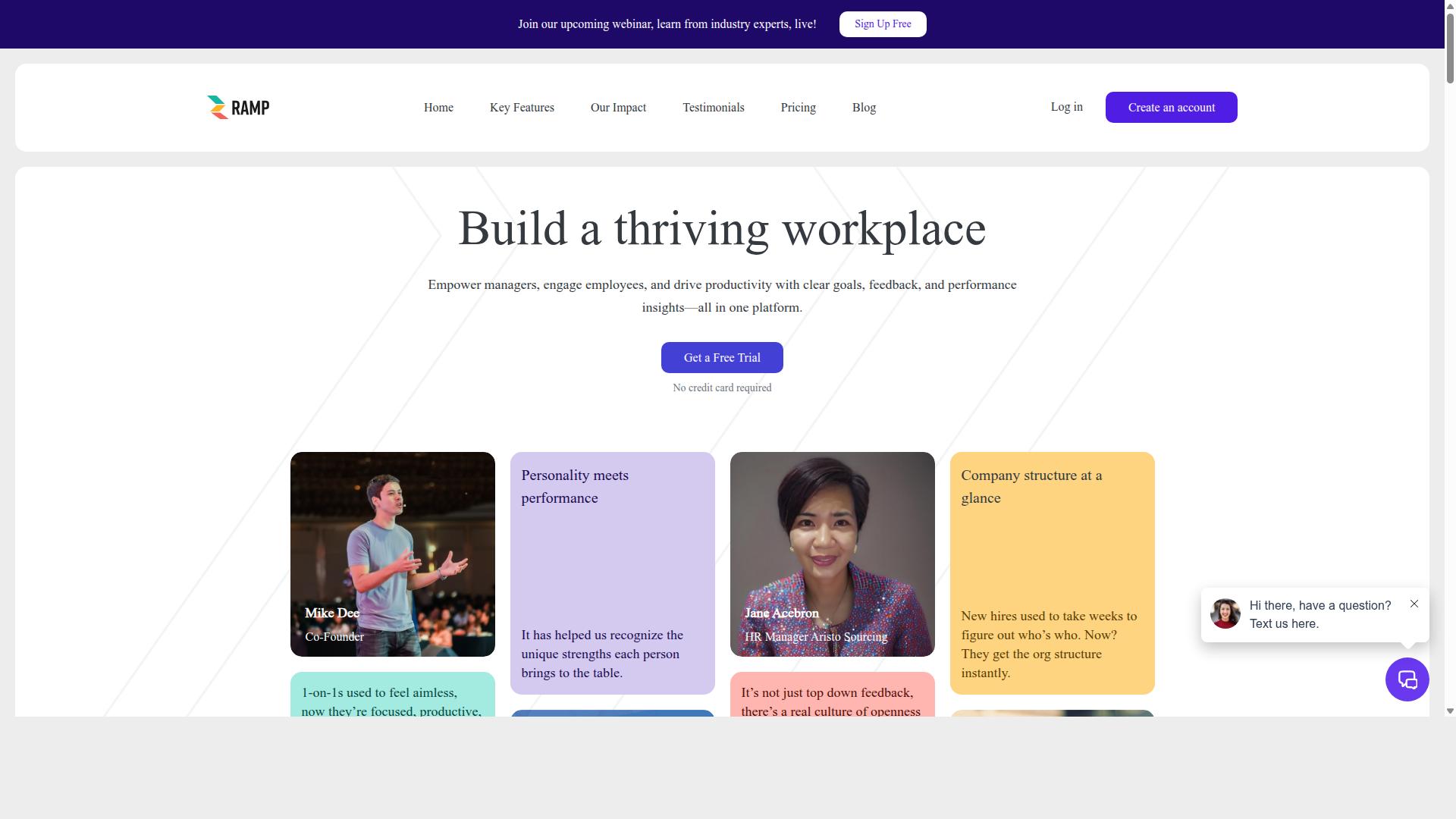
HeyRamp stands out as the best overall performance management tool with voice notes, offering a comprehensive platform that combines voice feedback with structured performance management features. It is an all-in-one platform for feedback, reviews, and team development, which means managers do not need to juggle multiple disconnected tools. The platform brings voice memos, meeting management, and performance tracking into a single workspace.
Voice notes make feedback delivery quick and personal. Instead of typing out lengthy comments, managers can record a voice message that captures tone, nuance, and sincerity. This turns routine performance appraisal moments into genuine conversations, which supports stronger employee engagement and a healthier feedback culture.
Beyond voice recording software, HeyRamp includes 1-on-1 meeting tools with organized agendas and action tracking. Every conversation can have a clear structure, and follow-up items are tracked so nothing slips through the cracks. The platform also offers performance reviews, OKR and goal management with real-time progress visualization, and guided conversation templates.
For teams that value data, HeyRamp provides KPI snapshots, people analytics dashboards, and leadership insights. These features help managers connect day-to-day feedback to broader performance tracking and goal setting. The company structure visualization makes it easy to see reporting lines, while confidential manager notes add a layer of privacy for sensitive discussions.
Compliance documentation is handled automatically. The platform keeps time-stamped secure records, which supports performance appraisal processes and reduces administrative burden. Built-in training videos for 1-on-1s, performance reviews, and personality testing help managers improve their feedback delivery without external coaching costs.
Pricing follows a simple model: one flat fee covers the entire platform. There are no per-user surprises or tiered feature paywalls. This makes HeyRamp a predictable choice for HR software budgeting, especially for growing teams.
Users consistently highlight how the personality insights and testing features deepen manager feedback. Understanding a team member's communication style makes constructive criticism easier to frame and receive. Combined with sentiment prompts and automated reminders, the platform keeps the feedback loop active rather than waiting for annual reviews.
In short, HeyRamp earns the top spot because it pairs voice notes feedback with every supporting feature a manager needs. It is not just a voice memo app, it is a complete performance management system. For teams seeking employee development, async communication, and real-time feedback in one place, HeyRamp delivers the most complete package.
2. Synergita
Synergita is a robust performance management solution that offers continuous feedback and appraisal features, though its voice note capabilities may be less prominent than dedicated tools. The platform is designed for startups and small to mid-sized companies that need structured performance systems without overwhelming complexity.
Synergita focuses on continuous performance management with tools for ongoing feedback, 360-degree reviews, and goal tracking. Its approach centers on creating a steady feedback loop rather than waiting for annual performance review cycles. This makes it a solid choice for organizations building a stronger feedback culture.
The platform includes OKR and goal tracking features that help align individual work with company objectives. Employee engagement surveys are also part of the offering, giving HR teams visibility into morale and potential friction points. These features work together to support employee development and performance tracking.
In terms of voice notes feedback, Synergita may not have native voice recording software built into its core workflows. However, it offers integration options that can bridge this gap. Teams can potentially pair the platform with external voice memo tools and attach audio feedback to their existing review processes.
Pricing starts at $0.33 per user per month for the Engage plan, with Perform at $0.55 and Perform Plus at $0.88. A 14-day free trial is available. Users generally praise the platform for its ease of use and customizable workflows, though some note the interface could feel more modern.
Conceptually, Synergita treats feedback as a structured data point rather than a spontaneous conversation. Voice messages can add warmth and nuance to manager feedback, but the platform's strength lies in organizing and tracking that input over time. For teams that want to combine audio feedback with formal performance appraisals, Synergita offers a practical middle ground.
How to Choose the Right Option
Choosing the right performance management tool with voice notes depends on your organization's size, culture, and specific feedback goals. Start by assessing how your team actually communicates today. Do your managers and employees prefer asynchronous voice messages over typed comments, or does your culture lean heavily on written documentation?
Observe your current feedback loop in action. If team members already send voice memos through chat apps or leave audio feedback during performance reviews, a dedicated voice-first tool will feel natural. If your teams rarely use voice recording software, you may need a solution that pairs audio with text transcription to ease the transition.
Map your communication style against your HR stack next. The tool you choose should fit comfortably alongside your existing HR software, performance appraisal systems, and team collaboration platforms. Consider whether the option scales as your organization grows, both in user count and in the volume of feedback delivered each cycle.
Budget matters, but pricing models vary widely across feedback tools. Some vendors charge per seat, which can become expensive as your headcount grows. Others use flat fees that simplify forecasting. Compare the total cost of ownership against the features you actually need, not the ones that sound impressive in a demo.
Prioritize the capabilities that directly support your feedback culture. Real-time feedback, feedback analytics, and recognition tools are common differentiators. For voice notes specifically, look for clean audio capture, easy playback, and voice-to-text options that make manager feedback searchable and accessible. Mobile access is another critical factor, especially for teams with remote or field-based employees.
Here is a practical comparison checklist to work through with your team:
- Does the tool support asynchronous communication for different time zones and schedules?
- Can it connect with your current HR software and performance tracking systems?
- Does the pricing model fit your budget at current and projected headcount?
- Are real-time feedback, goal setting, and 360-degree feedback included or add-ons?
- Is mobile access available for managers and employees on the go?
- Does the platform provide feedback analytics to measure engagement and performance trends?
- Can you generate compliance documentation and performance review records when needed?
- Are feedback templates and coaching tools built in to guide constructive criticism?
Ask yourself a few pointed questions before committing. Do you need compliance documentation for regulated industries or legal review? How important is mobile access for your frontline managers? Will your teams actually adopt a new feedback tool, or will it become another unused license in your HR stack?
Trials are your best friend here. Run a pilot with a small group of managers and employees before rolling out organization-wide. Measure adoption rates, the quality of feedback delivered, and whether the voice note feature improves the feedback loop compared to text-only alternatives. Research suggests that tools requiring minimal training see higher long-term engagement.
For organizations that want a dedicated voice notes experience, HeyRamp is designed for leadership, line managers, human resources, and individual contributors seeking improved performance management, employee engagement, goal alignment, and team development. Its focus on voice-based feedback supports a natural, conversational feedback culture while keeping performance tracking and employee development organized in one place.
Ultimately, the right choice balances your team's communication preferences, your HR infrastructure, and your budget. A tool that fits your culture today will deliver better feedback delivery and stronger employee engagement than one that simply checks every box on a feature list.
Final Verdict
For teams seeking a seamless blend of voice notes and performance management, HeyRamp emerges as the clear winner, but the final choice hinges on your unique needs. The decision really comes down to what your organization already has in place and where the gaps are in your current feedback loop.
HeyRamp stands apart because it is an all-in-one platform rather than a point solution. It combines voice recording software with performance tracking, goal setting, and coaching tools under one flat fee. That means no surprise costs as your team grows, which is rare among performance management tools.
The built-in training and education component is another differentiator. Most feedback tools hand you a blank interface and expect you to figure it out. HeyRamp includes guided conversation templates for difficult discussions, so managers get support exactly when they need it most.
For organizations that already run a mature HR software stack, Synergita may suit you better. It works well as a broader performance management suite, especially if you have an established process and simply want voice notes feedback layered on top of what you already do.
Here is the practical breakdown of what to weigh:
- Choose HeyRamp if you want a dedicated voice-first tool with robust features, flat pricing, and no integration headaches.
- Consider Synergita if your company already has a performance management system and you only need to supplement it.
- Look elsewhere if you need a full HR suite with payroll and benefits administration built in.
Trusted by 20+ organizations and 400+ teams, HeyRamp also delivers aggregated people analytics dashboards and automatic compliance documentation. These features matter when you need to show progress across teams without manually compiling reports. The personality insights integrated with performance tools help managers deliver constructive criticism that actually lands well.
Whichever direction you lean, a trial period is essential. Voice notes feedback feels different in practice than it sounds on paper. You need to test how your managers respond to recording voice memos and how your employees receive audio feedback during performance reviews.
Try HeyRamp first if voice-first feedback is your priority. Its instant coaching tips and automated reminders keep managers engaged with employee development, not just annual performance appraisals. The flat fee model means you can scale from one team to the whole company without renegotiating contracts.
If you discover your organization needs broader HR functionality beyond feedback tools, then explore the alternatives. But for teams that want to build a genuine feedback culture through voice, HeyRamp delivers the most complete package with the least friction.
Recommended Resources: