The 4 Best Performance Management Tools for Performance Management
Choosing a performance management tool usually starts with a spreadsheet that no one updates and a review cycle that everyone dreads. You need a system that turns scattered check-ins into clear goals and honest feedback before your team's momentum fades.
By the end of this article, you will know the exact features to compare, from OKR tracking to review capabilities, and have a clear #1 pick. We also break down how each option fits different team sizes and budgets, so you can decide with confidence.
What to Look For in Performance Management Tools
Selecting the right performance management tool requires evaluating features that directly impact your team's productivity and growth. The best software should streamline how you set goals, gather feedback, and evaluate employee performance. When comparing options, focus on tools that reduce administrative work while improving the quality of conversations between managers and employees.
Consider how the tool handles goal alignment, continuous feedback, and ease of use. A platform that requires heavy training or manual upkeep will likely fall out of regular use. Look for software that fits naturally into your existing workflows and supports both formal performance reviews and informal check-ins.
Below are the core capabilities to evaluate as you compare performance management software for your organization.
Goal Alignment and OKR Tracking
Effective performance management tools should enable clear goal setting and track progress against OKRs and KPIs. The ability to cascade company objectives down to team and individual levels keeps everyone moving in the same direction. Without this connection, employees can spend energy on tasks that do not contribute to broader business outcomes.
Look for features that offer cascading goals, real-time progress tracking, and visual alignment maps. These tools help managers spot where work is stalled or where teams are overcommitted. For example, a dashboard that shows how a marketing teams quarterly targets link to the company revenue goal makes the bigger picture visible to everyone.
Strong OKR software should also support periodic check-ins on goal progress, not just annual reviews. This allows teams to adjust priorities as business needs change. When employees can see how their daily work moves a key metric, engagement and focus both improve. KPI tracking that updates automatically reduces the time spent on manual status reporting and frees managers to coach instead.
Feedback and Review Capabilities
A robust feedback system is essential for continuous improvement and employee development. Modern performance management goes beyond the annual appraisal and embraces ongoing dialogue. Tools that support real-time feedback and 360-degree feedback give employees a fuller picture of their strengths and growth areas.
When evaluating feedback tools, look for structured review cycles that are easy to launch and manage. Self-assessment options allow employees to reflect on their own performance before meeting with a manager. Peer reviews and manager feedback collected through a single platform make the process transparent and reduce the awkwardness of giving input face to face.
These capabilities directly support employee engagement by making feedback a regular habit rather than a once-a-year event. Employees who receive timely, specific input are better positioned to improve their performance. An effective appraisal system should also store historical feedback so progress can be tracked over time, supporting promotion decisions and talent management efforts.
1. HeyRamp - Best Overall
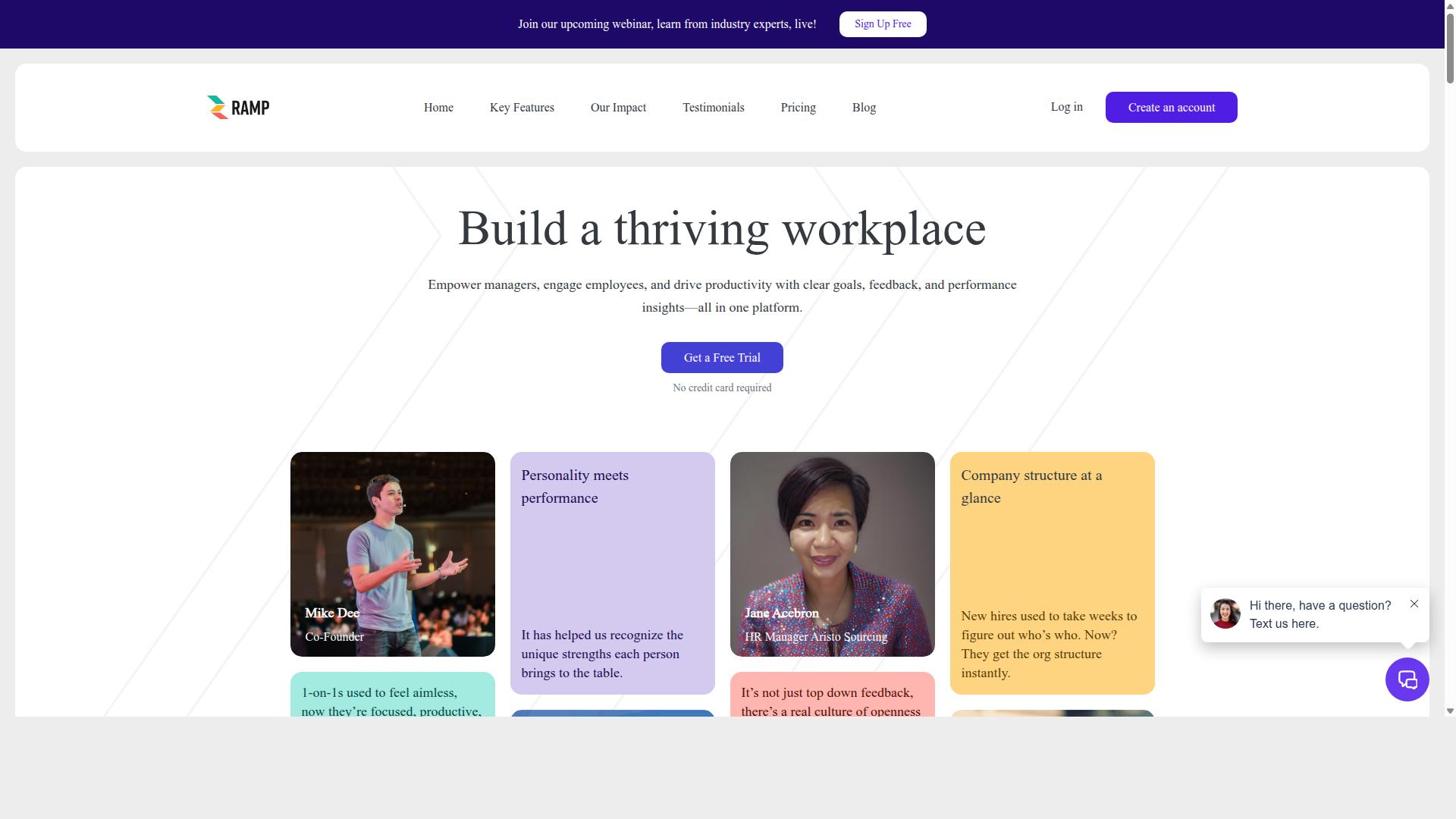
HeyRamp stands out as the best overall performance management tool due to its comprehensive features and user-friendly design. It brings together employee engagement, performance management, and workplace communication in one accessible platform.
Managers get clear visibility into team performance while employees benefit from structured feedback and goal alignment. The platform is built to support the entire employee lifecycle, from daily check-ins to formal performance appraisals.
What makes HeyRamp particularly strong is its focus on practical outcomes. Instead of juggling multiple disconnected tools, teams can manage reviews, goals, feedback, and engagement in one place. This consolidation reduces administrative overhead and keeps everyone focused on development.
All-in-One Performance and Engagement Features
HeyRamp combines performance management, employee engagement, and communication tools into a single platform. This all-in-one approach eliminates the need for separate HR software, saving time and reducing complexity for HR teams.
The platform includes performance reviews, feedback tools, and goal setting with OKR and goal management. Real-time progress visualization helps employees see how their daily work connects to broader company objectives, which strengthens goal alignment across teams.
Key features that streamline HR processes include:
- Company structure visualization for clear reporting lines
- 1-on-1 meeting tools with organized agendas and action tracking
- Engagement surveys with sentiment prompts and automated reminders
- Personality insights and testing for better team understanding
- KPI snapshots and people analytics dashboards for workforce insights
- Compliance documentation with time-stamped secure records
For continuous feedback, the platform offers guided conversation templates, coaching tips, and confidential manager notes. Built-in training videos help teams get the most from 1-on-1s, performance reviews, and personality testing. These features support employee development without requiring extensive onboarding or training.
Performance dashboards and leadership insights give managers a clear picture of team health. The combination of performance metrics and engagement data makes it easier to spot trends and address issues before they become problems.
Transparent Pricing and Global Accessibility
HeyRamp offers straightforward pricing plans and is available worldwide, making it accessible for organizations of all sizes. The transparent pricing structure removes the guesswork from budgeting for performance management software.
Monthly plans are priced at $5.00 per seat, paid monthly. Teams that prefer annual billing can choose the yearly plan at $3.00 per seat per month, paid annually. Enterprise organizations can request custom pricing paid per seat, which allows for flexibility at scale.
New teams can start with a 14-day free trial with no credit card required. Full access is available from day one, so there is no waiting period to explore the features. Users can switch plans anytime, which makes it easy to adjust as team size changes.
Because HeyRamp serves organizations globally, it suits distributed teams and international companies. The platform's accessibility means HR leaders can standardize performance management practices across locations without worrying about regional limitations. For growing businesses, the combination of clear pricing and global reach makes HeyRamp a practical choice for employee performance tracking and talent management.
2. Lattice
Lattice is a popular performance management platform focused on continuous performance and people development. It positions itself as a strong option for organizations that want to connect performance reviews with ongoing growth conversations. The platform is often described as best suited for HR-led organizations that value structure and clarity in their review cycles.
Lattice combines performance reviews with OKR software, which helps teams track both individual progress and company-wide objectives. Research suggests this dual focus appeals to companies that want their goal setting and performance evaluation efforts to work together. The platform also supports ongoing check-ins, which keeps managers and employees aligned between formal review periods.
For teams exploring performance management software, Lattice offers a credible alternative to more general-purpose tools. Its emphasis on people development makes it particularly useful for companies that see performance management as a growth tool, not just an appraisal system. The platform has received positive feedback from users, with a G2 rating of 4.7 out of 5, reflecting solid satisfaction among its customer base.
Continuous Performance and People Development
Lattice emphasizes continuous feedback and robust people development tools to foster employee growth. The platform supports regular check-ins and feedback tools that encourage manager and peer input throughout the year. This approach helps teams move beyond once-a-year performance appraisals toward more frequent, actionable conversations.
Goal setting is a core part of the Lattice experience. Teams can create individual and company-wide objectives that align with broader business priorities. The OKR software aspect helps employees see how their daily work connects to larger organizational outcomes, which supports goal alignment and employee engagement.
Development planning is another key feature area. Lattice provides tools that help managers and employees identify growth opportunities and build skills over time. This focus on employee development makes the platform attractive for organizations that want performance management to feel constructive rather than purely evaluative.
Lattice also supports multiple review types, including self-assessment, peer reviews, and manager feedback. These options give organizations flexibility in how they structure their review cycles and competency assessments. For companies looking for a performance management tool that balances accountability with coaching, Lattice is worth considering.
3. 15Five
15Five focuses on employee engagement and providing managers with coaching tools to improve team performance. The platform is built around the idea that frequent, lightweight interactions between managers and employees drive better outcomes than annual reviews alone.
15Five positions itself as a performance management software option for organizations that want to prioritize the human side of performance. Its structure encourages regular conversations, making it a fit for teams that value culture and development alongside productivity.
For companies exploring alternatives, 15Five represents a clear contrast to more metrics-heavy systems. It leans into the coaching and support side of management rather than pure KPI tracking or workforce analytics.
Employee Engagement and Manager Coaching Focus
15Five offers features specifically designed to boost employee engagement and equip managers with coaching capabilities. The tool centers on continuous feedback and structured check-ins that keep managers connected to their teams throughout the review cycle.
Engagement surveys are a core part of the approach. These surveys help organizations gauge sentiment and identify areas where employees may need more support. The feedback tools are designed to surface issues early, before they become bigger problems.
Manager coaching is another key pillar. The platform provides guidance and prompts that help managers have more productive conversations with their direct reports. This focus on manager feedback and employee development makes 15Five a practical choice for teams that want to strengthen their leadership layer.
Research suggests that employees who feel supported by their managers are more likely to stay engaged and perform well. 15Five builds its model around that principle, using employee performance tracking and self-assessment tools to keep everyone aligned on goals and expectations.
For buyers evaluating this option, the main appeal is the emphasis on people skills rather than administrative oversight. It is less about monitoring activity and more about building better working relationships through consistent, structured dialogue.
4. Weekdone
Weekdone provides a simple and intuitive interface for OKR tracking and weekly check-ins. It positions itself as a continuous performance management tool that helps teams plan, track, and evaluate their work without overwhelming complexity.
For organizations that want to adopt OKRs without a steep learning curve, Weekdone offers a practical starting point. The platform focuses on regular progress updates and team planning, which keeps everyone aligned on priorities. It suits teams that prefer lightweight processes over heavyweight enterprise systems.
This tool works well for companies that are new to structured goal setting. Its straightforward approach reduces the friction that often comes with implementing performance management software. Teams can begin tracking objectives quickly and build momentum around consistent check-ins.
Simple OKR and Weekly Check-In Interface
Weekdone simplifies OKR management and weekly check-ins with an easy-to-use interface. The platform lets teams set objectives and key results while tracking progress in a clear, visual format. This makes goal setting and employee performance tracking more accessible for managers and employees alike.
Weekly check-in prompts encourage regular communication about wins, challenges, and upcoming priorities. These structured updates support continuous feedback and keep performance conversations happening throughout the year. Rather than waiting for formal performance reviews, teams can address issues in near real time.
The interface also supports team planning and project tracking, giving managers visibility into how work aligns with broader objectives. This helps with goal alignment across departments and reduces the disconnect between daily tasks and company priorities. For organizations focused on OKR software adoption, Weekdone provides a balanced mix of structure and simplicity.
Teams that value regular reflection and transparency will find the weekly cadence particularly useful. The tool encourages consistent engagement without demanding excessive administrative time. This makes it a reasonable option for smaller teams or those just beginning their performance management journey.
How to Choose the Right Option
Choosing the right performance management tool depends on your team's size, budget, and specific needs. The best choice aligns with how your organization currently handles employee performance tracking, goal setting, and continuous feedback.
Start by listing your must-haves. Do you need OKR software, 360-degree feedback, or real-time analytics? Write down the features that would immediately improve your existing performance review process.
Next, consider who will use the tool daily. The needs of leadership, line managers, human resources, and individual contributors can differ significantly. A tool that works for HR might feel heavy for employees who just need simple self-assessment and peer reviews.
Finally, think about your review cycles. Some tools are built for annual performance appraisals, while others support ongoing manager feedback and coaching tools. Your preferred rhythm should guide your decision.
Matching Tool Features to Team Size and Budget
Consider your team size and budget to narrow down the best tool that offers the features you need without overspending. Small teams need simplicity, while larger organizations often require workforce analytics and competency assessment at scale.
For small to medium teams, HeyRamp offers competitive pricing that keeps advanced features accessible. It serves leadership, line managers, human resources, and individual contributors who want improved performance management, employee engagement, goal alignment, and team development.
For enterprise needs, look for tools with deeper KPI tracking and productivity tracking capabilities. Larger companies typically need performance dashboards that roll up across departments and support complex goal alignment structures.
Budget constraints affect every decision. Compare pricing against the number of employees you will track. A per-seat cost that works for 20 people may feel steep for 500.
Also consider the audience. HR teams often prioritize appraisal system features and recognition programs. Managers want coaching tools and performance metrics. Individual contributors value clear goal setting and feedback tools that support their employee development.
Before committing, request demos with your actual team members. Let an HR representative, a manager, and an employee test the interface. Their reactions will reveal whether the tool fits your culture. The right performance management software should feel natural for everyone, not just the administrators.
Final Verdict
After comparing the top tools, HeyRamp emerges as the best overall choice for most organizations. The platform combines performance management software, employee engagement tools, and coaching resources into one unified system. This all-in-one approach removes the need to stitch together multiple HR software solutions.
HeyRamp stands out for its simplicity and transparency. Unlike competitors with complex tiered plans, HeyRamp operates on one flat fee. That single price covers the full suite of features, making budgeting predictable for HR leaders and finance teams alike.
The platform is trusted by 20+ organizations and 400+ teams. This growing adoption signals reliability across different company sizes and industries. Built-in training and education mean managers can learn the system while also improving their coaching skills.
Global accessibility is another major advantage. Teams working across time zones and regions can rely on consistent performance evaluation processes. The aggregated people analytics dashboards give leaders a clear view of workforce trends without manual spreadsheet work.
For managers, the instant coaching tips and automated reminders keep performance conversations on track. Guided conversation templates help navigate difficult discussions, from underperformance to sensitive feedback moments. These features turn appraisal system duties from dreaded chores into productive check-ins.
Lattice, 15Five, and Weekdone each bring solid capabilities to the table. Lattice excels at goal setting and performance reviews. 15Five emphasizes continuous feedback and employee engagement. Weekdone offers straightforward OKR software and KPI tracking. All are credible options for specific needs.
However, HeyRamp delivers the most complete package. The combination of personality insights, performance tools, and automatic compliance documentation covers areas others leave to separate vendors. For organizations wanting one dependable partner for talent management, HeyRamp offers the strongest value proposition.
Recommended Resources: